
How much does it cost to play on the Epson Tour? No single season total fits every player, and anyone who quotes one is averaging over very different situations. A player who lives with a host family and drives between events spends far less than one who flies, rents a car and books a hotel every week. What can be said with confidence is the structure of the costs, and the structure explains a lot about why talented players struggle to stay on tour.
This article treats a season as a small business with an expense side and an income side. It gives you the categories, the logic of how they interact, and where to find the current figures for any event you care about.
Why talent alone doesn’t fund a season on the Epson Tour
Epson Tour players are independent professionals. They pay their own way: entry fees, transportation, lodging, food, caddie, coaching and equipment all come out of their own pocket or their backers’ pockets. The tour’s purses are the only built-in income, and a player collects from them only by finishing high enough at events where she made the cut.
That arrangement creates an unusual business. The expenses arrive every week, whether the player plays well or badly. The income arrives only after a good week, and it is paid in proportion to finish position. A player who misses a cut has paid for the whole trip and collected nothing.
College golf hides this. Programs generally cover team travel, lodging and entry fees, so players graduate without ever having planned a travel budget. Turning pro replaces a managed schedule with a set of financial decisions, and the best ball-striker in a class is not automatically the one who makes them well. Our piece on the Epson Tour pathway covers how players get into the field. This one covers what it costs to stay there.
The expense side: entry fees, travel, lodging, caddie and coaching, line by line
Think of the expenses in two groups: costs that repeat every tournament week, and costs that belong to the season as a whole.
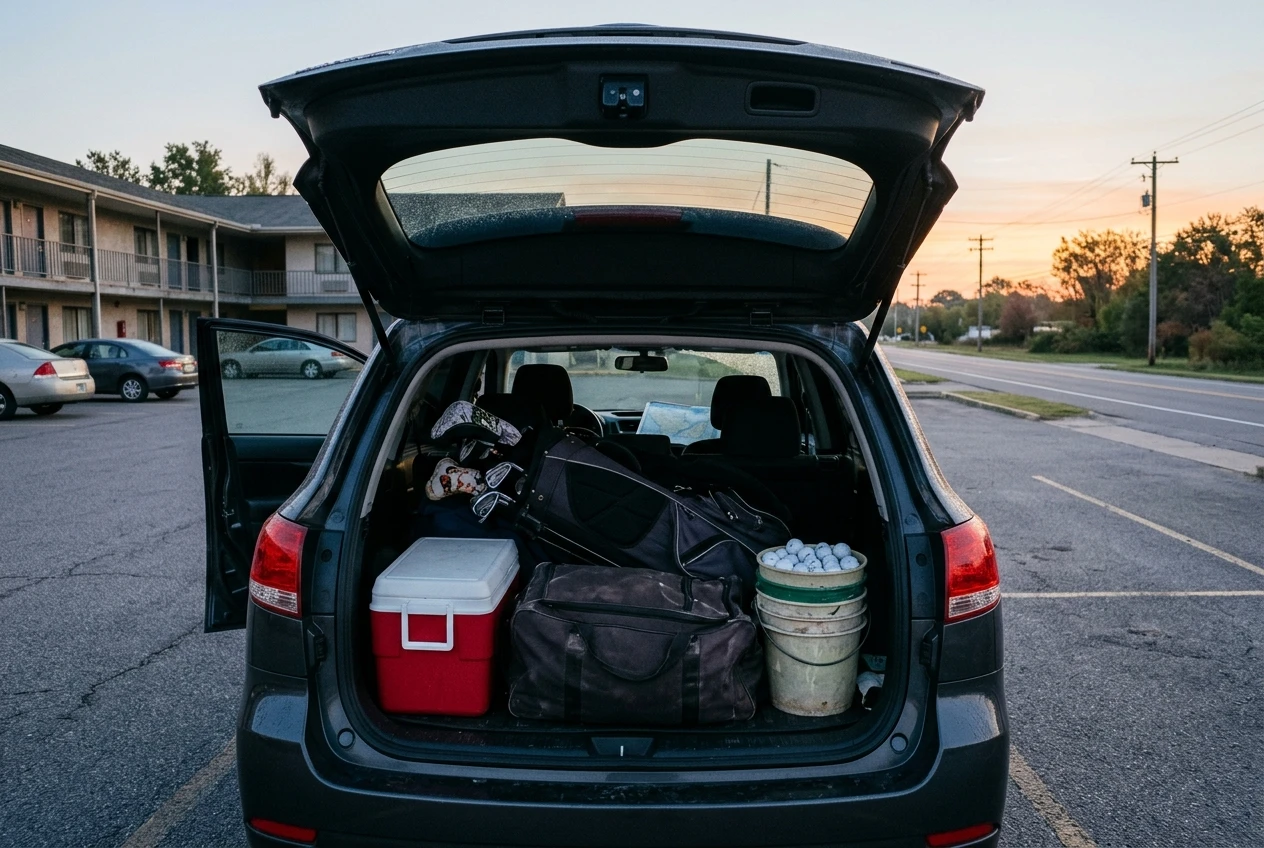
Weekly costs
- Entry fee. Each event charges one. The amount is set by the tour and can differ from event to event, so check the tour’s official site for the current fee on any event you are budgeting for.
- Getting there. This is either airfare plus a rental car, or fuel and wear on a vehicle for players who drive. Distance between consecutive events matters more than almost any other variable, which is why the schedule’s geography shapes a player’s budget.
- Lodging. A hotel for the tournament week, plus any practice days before it. Lodging costs scale with the number of nights, so arriving early to learn the course adds to the bill.
- Food. Small per day, but it runs every day of the season.
- Caddie. Players who hire a caddie typically pay a weekly arrangement plus the caddie’s own travel costs, depending on what the two agree. Some players carry their own bag or use a friend or family member to reduce this line. Specific rates are private agreements, so treat any number you read in a general article with caution.
- Practice rounds and range costs. Some are covered by the tournament, some are not.
Season-long costs
- Coaching. A swing coach, a short game coach, a mental performance coach, or some combination. Some coaches charge by the lesson, some by retainer, and some travel to events.
- Equipment. Clubs, balls, shoes, bags and apparel. Players without equipment sponsors buy at least some of it themselves.
- Fitness and recovery. Trainer sessions, physical therapy and travel-friendly gear to keep a body healthy across a long season.
- Insurance and administration. Health coverage and the paperwork of being self-employed, including taxes on whatever is earned.
- Qualifying costs. Getting into fields, and later into LPGA qualifying events, carries its own fees. Our explainer on what LPGA Q-School is walks through that stage.
Written out like this, the list makes one point clear: most of these costs scale with the number of events played. A fuller schedule raises the chance of a big week but also raises the bill every time, and a player has to decide how many starts she can afford.
The income side: what prize money, sponsors and family support can realistically cover
Income comes from four places, and for most players they combine rather than stand alone.
Prize money. Each event posts a purse, and checks are paid down the leaderboard, with the winner receiving the largest share. Because purses are divided across the field, the payment for a finish outside the top handful is a fraction of the winner’s check. Players who miss the cut earn nothing for the week. The tour’s results pages list official earnings, which makes this the best-documented number in the whole picture.
Sponsors. Some players have sponsors who contribute money, equipment or apparel. Many have none, especially in their first seasons. A sponsorship is also a commitment: sponsors expect exposure and results, and the relationship takes work to find and keep.
Family and personal backing. For many players this is the largest source of money in the early years. Parents, relatives and sometimes a circle of local supporters contribute to the budget. It is a real financial transfer, and it shapes who can afford to try. Players without that backing have to find other sources.
Side work. Teaching, working at a club, coaching juniors in the offseason, or other jobs bring in money, though they also take time away from practice.
The useful exercise for any player is a break-even calculation: add up the expected expenses for a season, then work out what finish position, how many times, would be needed to cover them from prize money alone. Even a rough version of that exercise shows how much a player depends on outside support to get through the months when results haven’t arrived yet.
How players stretch a budget: host families, shared rooms, driving between events and part-time work
Because the expense side is so heavy, players develop a set of habits to shrink it. These are well known among followers of the tour, and the specific mix varies by player.

- Host families. Many tournaments connect players with local families who offer a spare room for the week. This can remove the lodging line almost entirely and often brings home-cooked meals and a ride to the course. Players also get something that hotels do not offer, a person to talk to who has nothing to do with golf.
- Shared rooms. Splitting a hotel room or rental house with another player cuts lodging in half or better. Sharing a rental car works the same way.
- Driving. When the next event is within a reasonable distance, driving avoids airfare and baggage fees, though it trades money for time and fatigue. Players who drive a lot have to account for the toll on their bodies before the tournament starts.
- Reduced caddie costs. Family members, friends or fellow players sometimes carry the bag, and some players carry their own.
- Careful scheduling. Choosing which events to enter, based on location and cost as well as course fit, is a budgeting decision as much as a golf one.
- Part-time or seasonal work. Teaching and club jobs between stretches of tournaments help fill the gaps.
Each of these saves money by spending something else: comfort, sleep, privacy or practice time. The cheapest week is not always the best for scoring, and players have to weigh both.
The cost of not making it: what a missed card or a bad stretch does to a season
A bad stretch on the Epson Tour is expensive in two ways at once. The player earns little, and the costs continue. Two missed cuts in a row can wipe out the margin that one good week built.

A missed cut also changes decisions, not just balances. A player running short of money may skip an event she would otherwise enter, choose a cheaper flight over a better practice schedule, or sell some of her focus to a side job. Those choices can lower the odds of a rebound, which makes the cost of a slump larger than the money lost in the slump itself.
The end of the season brings a larger version of the same problem. Players who finish outside the positions that earn LPGA membership must decide whether to go back to qualifying, try another season on the Epson Tour, or step away. Each option costs money, and families have to decide again how much more to put in. There is no guarantee the next year will be different, and that uncertainty is the hardest part of the business to plan around.
What the money tells us about the road to the LPGA, and how it connects to Q-School
The pathway looks like a ladder in the standings: play well on the Epson Tour, finish high on the season-long list, and earn LPGA status. The money shows the other side of it. Staying on that ladder for as long as it takes costs real dollars every week, and the players who can keep climbing are often the ones who can afford more attempts.
That is one reason talent and results do not always line up perfectly. A player with a slightly weaker game but a steadier budget can play a full schedule, while a player with a stronger game and a thinner budget has to choose her events carefully. Over a season, the number of starts matters. So does the stability that makes a bad week survivable.
Qualifying school adds another layer. Q-School and the related qualifying events cost money to enter and to travel to, and they come at a point where a player’s budget may already be stretched by a full season of tournaments. If you want to understand that stage, our guides on how to prepare for LPGA Q-School and the overall qualification process cover how it works. The financial angle is simple: Q-School is another entry fee and another trip, with high stakes.
For junior and college players and their families, the practical lesson is to build a budget before turning pro, not after. Decide how many events to play, who is funding what, and what result or date would trigger a rethink. The planning is dull, but it determines how many chances a player gets to use her game.
What fans can do to support the players climbing the ladder
Fans have more influence on this than they might think, mostly at the local level.

- Attend Epson Tour events near you. Many are free or inexpensive to watch, and a crowd matters to players who often play in front of very few people. Walking the course and applauding good shots is real support.
- Volunteer. Tournaments run on volunteers, and a well-run event is better for everyone in the field.
- Offer or promote host housing. If you live near an event, ask the tournament about its host family program. A spare room for a week can save a player a significant lodging bill.
- Follow and share. Players with a following find it easier to attract sponsors. Following them, sharing their results and engaging with their posts costs nothing and helps their visibility.
- Support sponsors who support the tour. Sponsors and tournament partners make the purses and events possible, so noticing them matters.
- Learn the names. Knowing who is climbing, and what they are paying to do it, makes the tour more interesting to watch. Our look at college players and Epson Tour pros to watch is a good place to start.
Understanding the cost side changes how you read a leaderboard. A player grinding through a mid-pack finish in a week she barely broke even on is doing something harder than the result suggests, and fans who see that tend to follow the tour more closely and more generously.
Subscribe to Inside Women’s Golf to get new player journey stories, from junior golf to college to the Epson Tour and the LPGA, delivered to your inbox.